No bees, no beans...sorry!

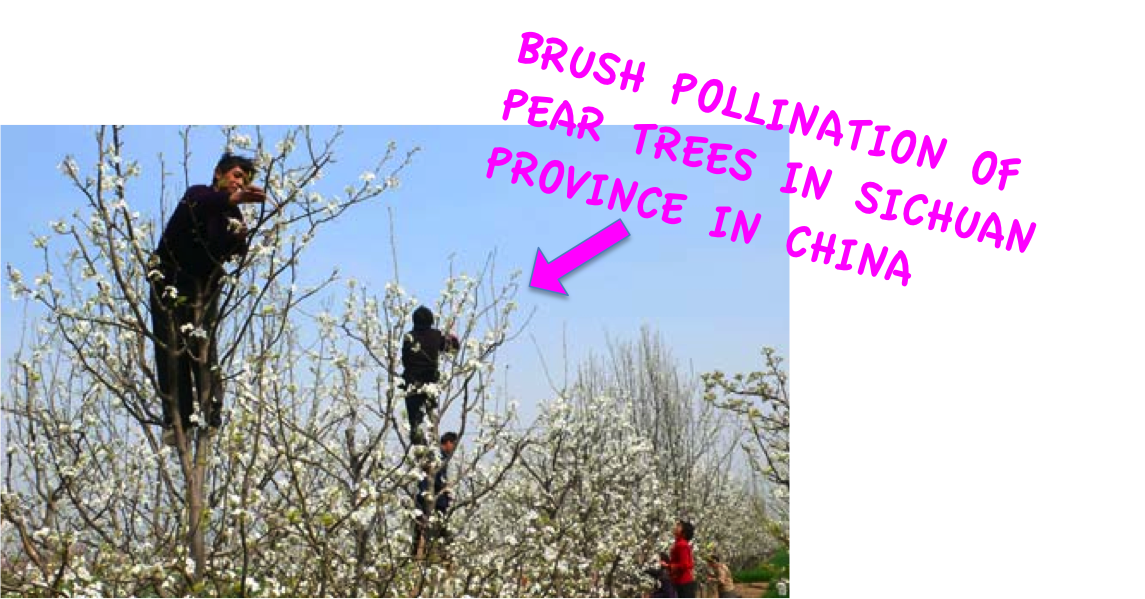
75% of all the foods that we eat are the result of pollination from insect pollinators, such as bees. Without them, we would be busy pollinating plants ourselves, using brushes (don’t laugh, this is actually a reality in some places!) or eating wind-pollinated foods such as corn.

In the UK, bee pollination services contribute an estimated £200 million per year to the UK economy.  If we were to take over the role of pollination from bees in the UK alone, it would require a workforce of 30 million people!
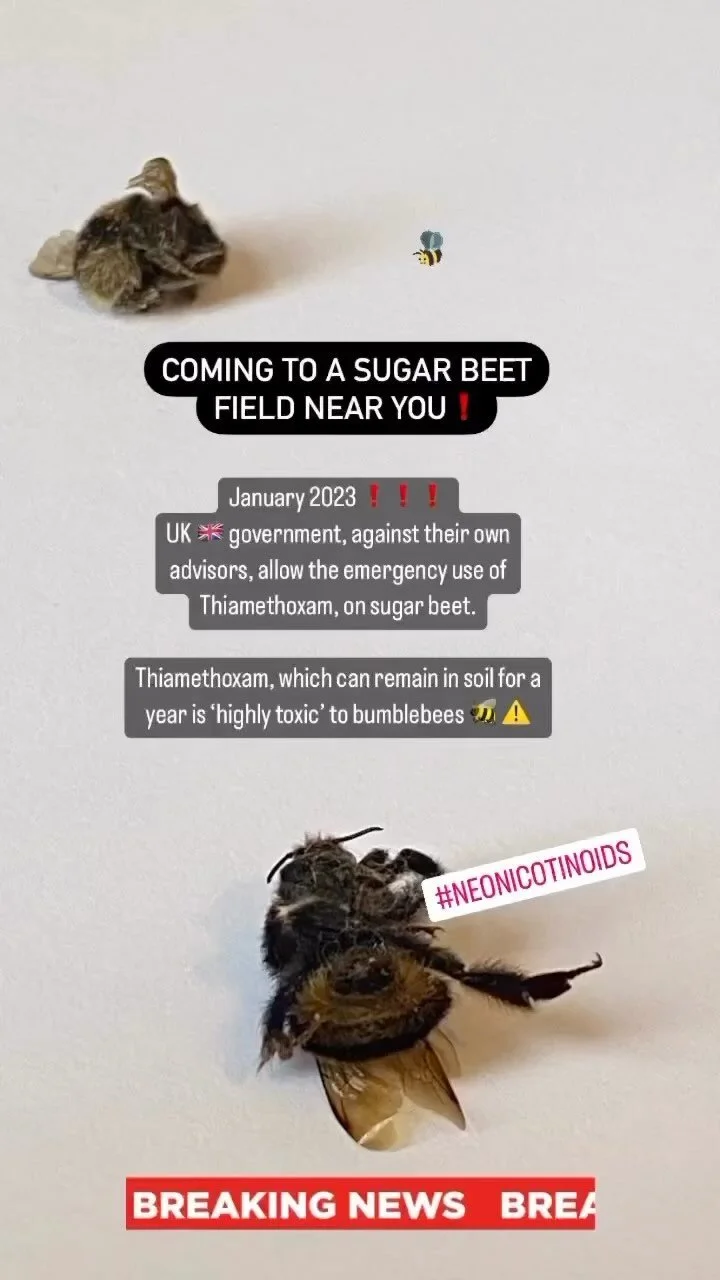
Disappearance of bees is a very real threat, with honeybee numbers dropping by 50% in the last 25 years (and other pollinators expected to be the same if not worse). Other bee species are also declining, with habitat loss the primary cause for this. However, pesticides and human development are also a big problem for bees — even small amounts of pesticides have been associated with declines in the number of nest queens and increase in the number”disappeared” bees – those that fail to return from food foraging trips. And despite ample evidence for this, the British government is failing to take necessary steps to reduce it’s pesticide use (see this recent article in The Independent).

The good news is that even while those at the top dither, we can all help make a difference. The best thing we can do to help bees is to plant native flowers in the garden. Not only do they look fantastic, they’re hardy, resistant to slugs and pests, suited to our climate, and they’re bursting with pollen and nectar. If you have access to a larger area of land, why not plant (or encourage the owner to plant) a whole meadow, or a strip of wildflowers along field and road verges. You could also take part in national bee surveys, or learn to become a beekeeper.

AND if you have an allotment or grow veg, setting aside space for a wildflower meadow is a great way to return the favour for the bees’ pollination services!

Remember: “Beanz Meanz Beez”
Soil in September

Last Tuesday was a ‘Soil’ themed evening at the London permaculture picturehouse, and as a result of a fabulous night, I felt inspired to blog about soil.

As a gardener I have September down in my (hypothetical) diary as a time to start focussing on soil. If nothing else, the alliteration of it makes me remember… ‘Soil in September’.  It has a nice ring to it. And, it’s lovely to spend some time reflecting on one of our most important (and most overlooked resources). I mean how often do you even look at the ground, never mind wonder what’s going on there, or care for it?! Yep, I bet not to often.

When you think about it, and learn about it, Soil is really remarkable stuff. I mean, we walk on it, build on it, and it provides much in return, such as food, clothing, and it even acts as a carbon sink.

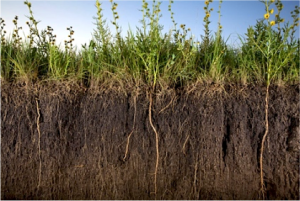
What’s more, healthy soil is alive! Soil contains billions of micro and macro-organisms that work with each other and the plants in symbiotic relationships to provide the resources that we rely upon. They are essentially a massive army of recyclers! Breaking down matter into smaller, and smaller pieces and feeding it back to the plants.

Under our feet is a rather fragile ecosystem that like us, needs water, nutrients and air to survive. Digging and turning over soil results in a temporary increase in fertility due to the death of many of these microorganisms, most of which are uniquely adapted to their specific strata in the soil.  If dug infrequently the soil life can survive.  However, since the use of the plough, then the tractor and then finally the introduction of chemical fertilisers by military chemical companies since WWII it has been unsurprising that soil and plant health has been in serious decline.

So, as permaculturalists, September is a time to care for your soil, build raised beds (or build your garden so you don’t compact the soil). Mulch! And maybe take time to learn more about soil, and to fight for it! … I’m not joking, our soil really could do with some help – take a look at these figures (from physorg):

  • During the past 40 years nearly one-third of the world’s cropland (1.5 billion hectares) has been abandoned because of soil erosion and degradation.
  • About 2 million hectares of rain-fed and irrigated agricultural lands are lost to production every year due to severe land degradation, among other factors.
  • It takes approximately 500 years to replace 25 millimeters (1 inch) of topsoil lost to erosion. The minimal soil depth for agricultural production is 150 millimeters. From this perspective, productive fertile soil is a non-renewable, endangered ecosystem. – The Global Education Project
  • A Cornell University scientist says soil around the world is being swept and washed away 10 to 40 times faster than it’s being replenished.
  • Professor of Ecology David Pimentel says cropland the size of Indiana is lost each year, yet the Earth’s need for food and other grown products continues to soar.
  • “Soil erosion is second only to population growth as the biggest environmental problem the world faces,” said Pimentel. “Yet, the problem, which is growing ever more critical, is being ignored because who gets excited about dirt?”
  • Pimentel said 99.7 percent of human food comes from cropland, which is shrinking by nearly 37,000 square miles each year due to soil erosion, while more than 3.7 billion people are malnourished.
  • The study, which pulls together statistics on soil erosion from more than 125 sources, notes the United States is losing soil 10 times faster — and China and India are losing soil 30 to 40 times faster — than the natural replenishment rate.
  • Damage from soil erosion worldwide is estimated to be $400 billion per year.

Get’s you thinking doesn’t it?

Well, as a last bit of brain food I’ll leave you with a short video from soil guru Dr. Elaine Ingham….

Anna, MAYA Team :)

Update from Maya Italia

It’s been an exciting year so far for MAYA Italia! Our Roma-based MAYA team have been involved in a number of super collaborations with Landemed – a project looking at the planning and management of urban green spaces and urban eco-systems in Italy.

E’ stato un anno eccitante fin’ora per MAYA Italia! Roma-Il nostro team di MAYA è stato coinvolto in una serie di collaborazioni eccellenti con Landemed – un progetto che si occupa della pianificazione e della gestione sostenibile degli spazi verdi e degli ecosistemi urbani in Italia.

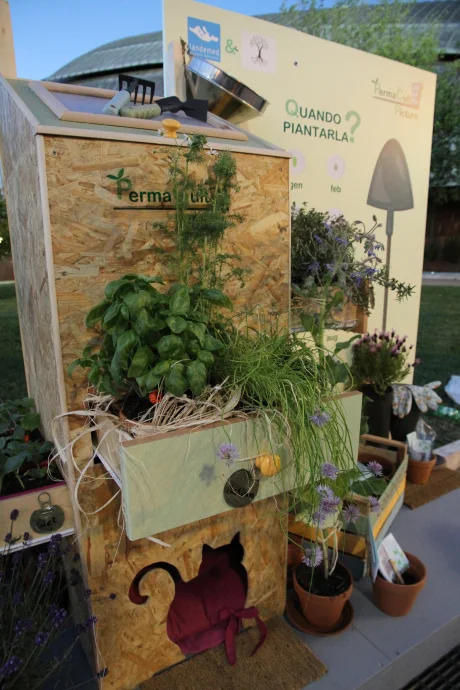
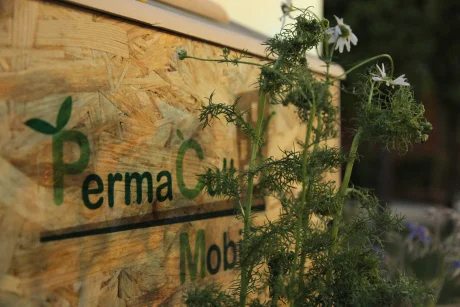
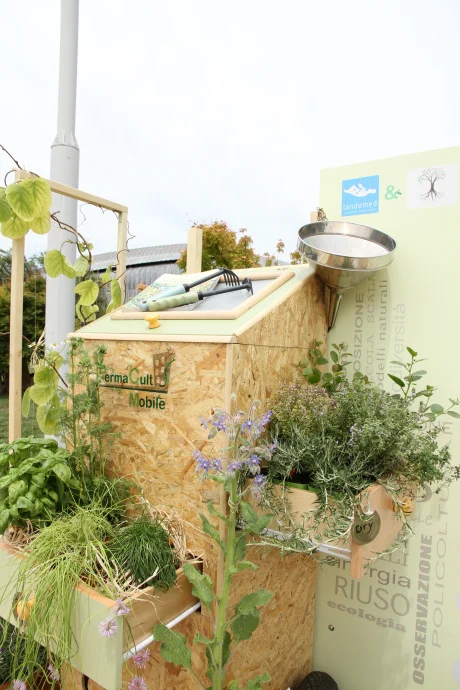
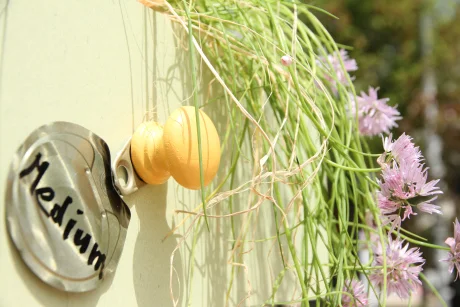
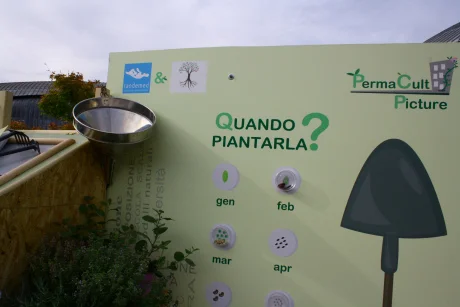
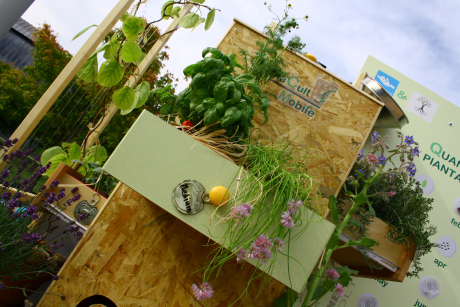
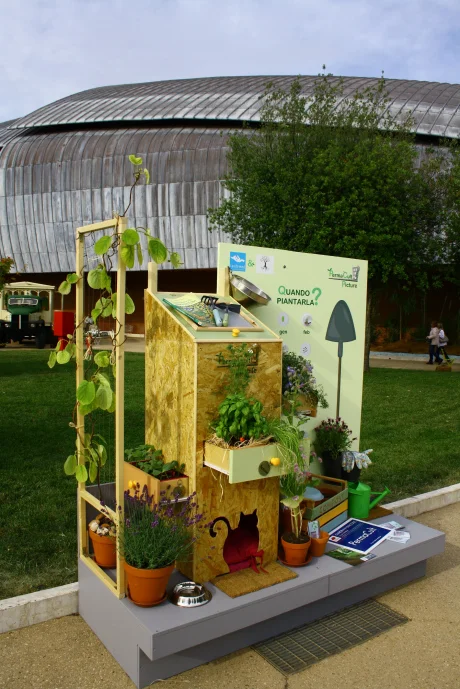
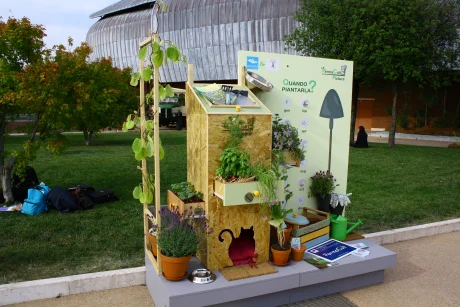
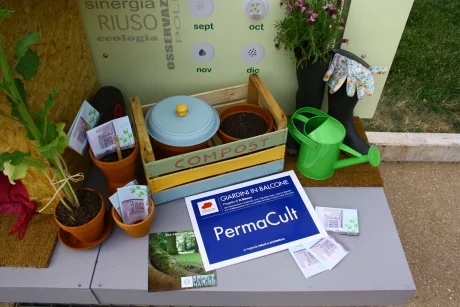
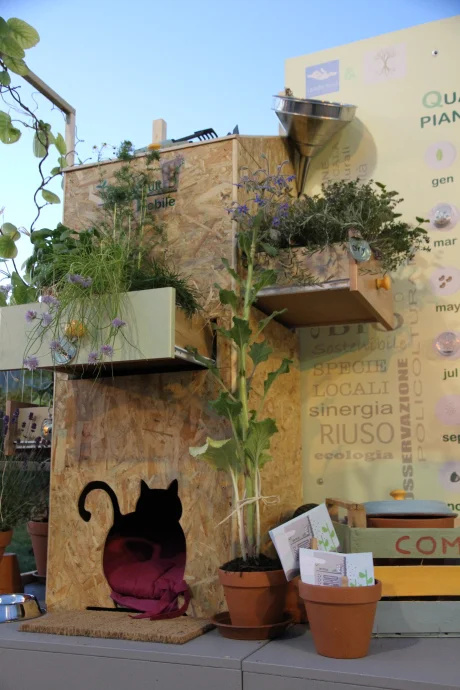
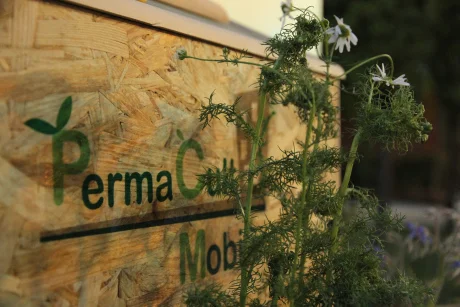
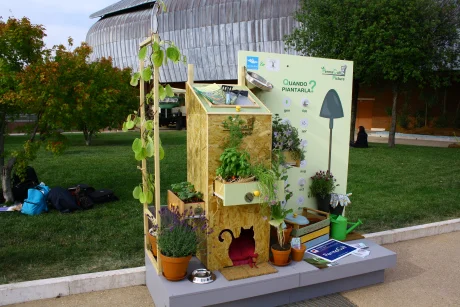
Last month, MAYA Director Nina, and Associate Annachiara (also of Landemed) created the PermaCult mobile – an urban growing system for balconies that incorporates both irrigation and temperature systems:

Il mese scorso, le due socie del progetto MAYA, Nina e Annachiara, hanno creato il mobile PermaCult, un piccolo sistema urbano per la coltivazione di spezie e ortaggi sui balconi che segue i principi della permacultura:

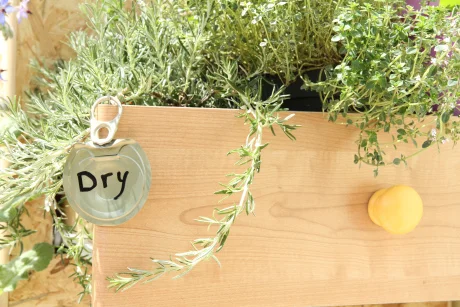
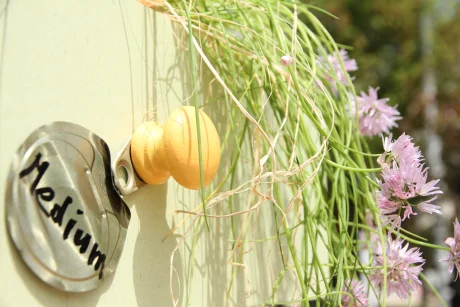
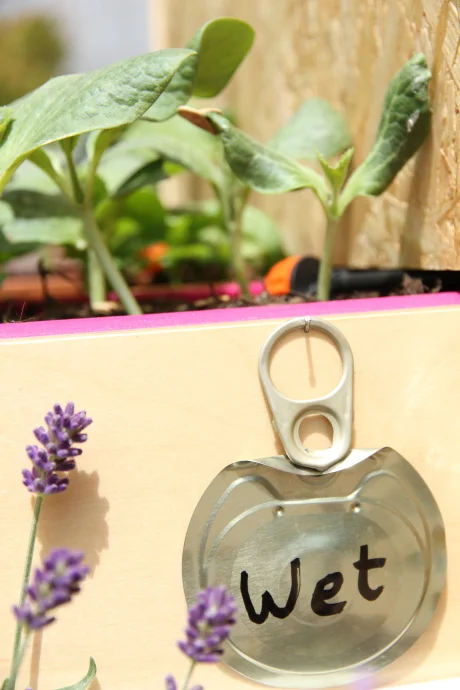
Synergy with waterthe water poured in the funnel flows from the top drawer (here we chose plants well-adapted to arid ecosystems – caper, thyme, and oregano) to the middle one (basil, chives and spring onions) and finally to the bottom and wettest drawer (where we put different kinds of sprouts).

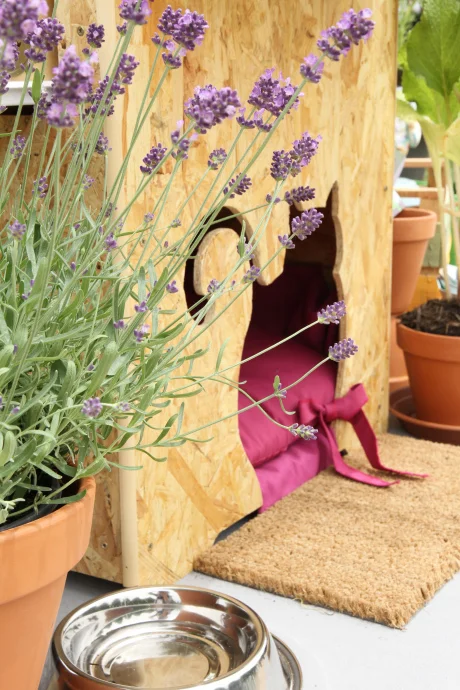
Synergy with animals: the cat (could also have been a dog house or a rabbit hole or a chicken cage..) releases CO2 and methane needed by the plants; in exchange, the plants keep the animal house at a constant temperature.

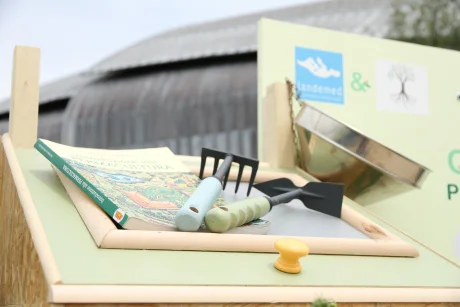
Other cool stuff: the wheels make the PermaCult mobile easy to move around chasing the sun/shade, while on the top of the mobile there is a glove compartment to keep the garden tools and the ‘introduction to permaculture’ book ;o)

Sinergia con l’acqua: l’acqua versata nell’imbuto fluisce dal cassetto superiore (in questo caso abbiamo scelto piante ben adattate agli ecosistemi aridi, come capperi, timo e origano) a quella di mezzo (basilico, erba cipollina e cipollotti) e infine al cassetto inferiore e più umido, dove sono stati messi diversi tipi di germogli.

Sinergia con gli animali: il gatto (potrebbe anche essere stata una cuccia di cane o di coniglio o una gabbia per polli ..) rilascia CO2 e metano necessari dalle piante, in cambio, le piante mantengono lla casa degli animali a temperatura costante.

Altro elemento utile: le ruote rendono il mobile PermaCult facile da spostare, all’inseguimento del sole o dell’ombra a seconda delle necessità; mentre sulla parte superiore del mobile c’è un vano portaoggetti per mantenere gli attrezzi da giardino e il libro ’Introduzione alla Permacultura’ per farsi ispirare su nuove idee ;o)

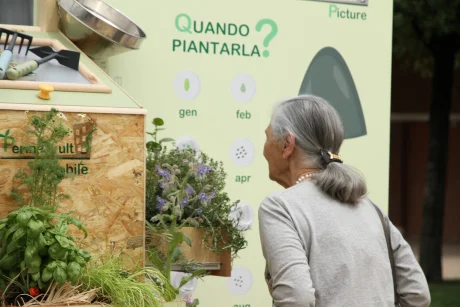
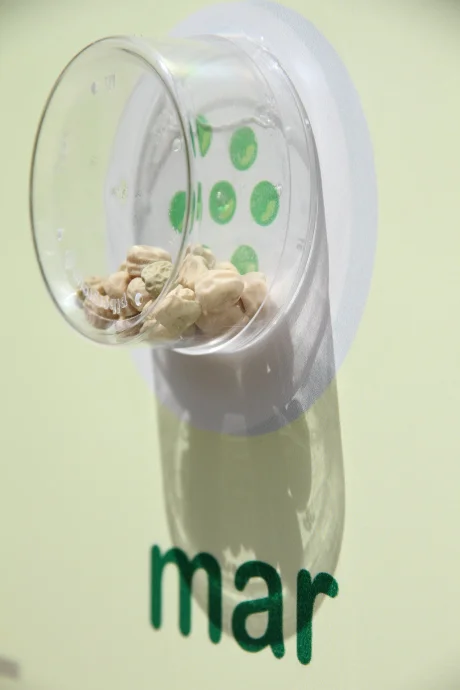
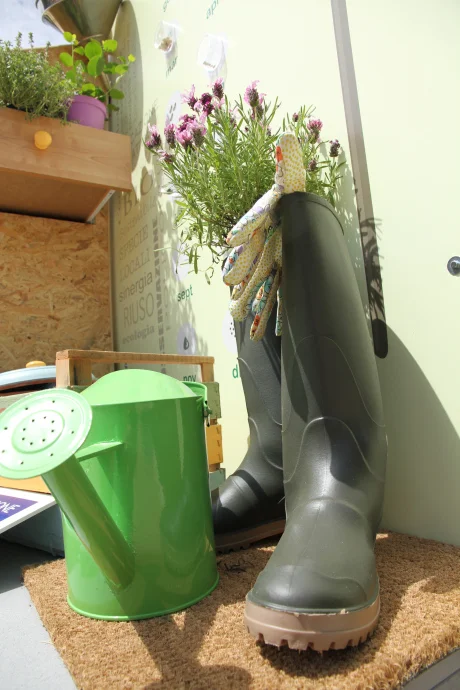
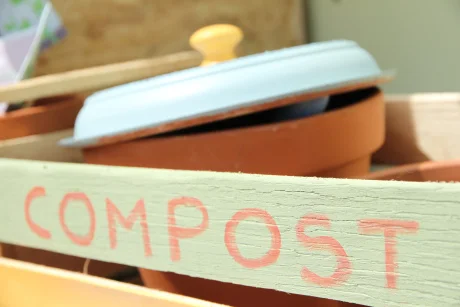
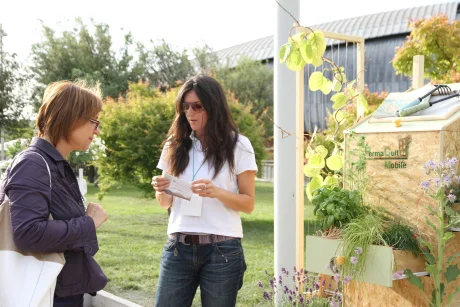
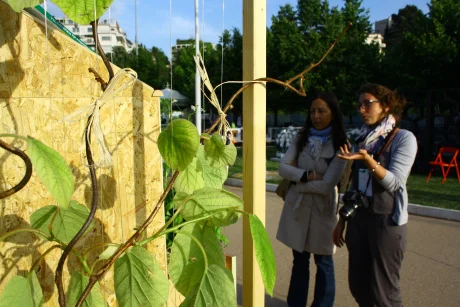
The pictures above show the PermaCult mobile being presented at the Festival del Verde e del Paesaggio (literally festival of the Green and of the Landscape) at the Audiotorium Parco della Musica in Rome. A brilliant opportunity to meet landscape planners, horticulturists, gardeners, green lovers and many many others…

Le immagini qui sopra mostrano il mobile PermaCult presentato al Festival del Verde e del Paesaggio all’ Audiotorium Parco della Musica di Roma. Una splendida opportunità per incontrare progettisti del paesaggio, orticoltori, giardinieri, amanti verdi e molti altri ancora…

In other MAYA Italia news, Nina and Antwerp-based Associate Eva-Maria launched the MAYA Eco-Photo Gallery Project – a collection of images taken by MAYA associates covering all aspects of people, place and planet. Check it out – It’s pretty cool! – plus the photo’s are freely available for non-profit/educational purposes. For more info email info@mayaproject.org

Inoltre Nina e la nostra socia di Anversa, EvaMaria, hanno creato il MAYA Eco-Photo Gallery Project, una collezione di immagini raccolte tra tutti i soci MAYA che coprono i vari aspetti delle nostre ricerche, la gente, gli habitat, il pianeta. Buttateci un occhio, ne vale la pena! Per di più le foto sono utilizzabili gratuitamente per scopi educativi. Per maggiori informazioniinfo@mayaproject.org


Ciao for now,

MAYA Italia

Green fair calling

Any plans for the weekend of the 9th and 10th of June? Live in or around London? If your answer is no followed by yes, we totally recommend a visit to Regent’s Park, where the London Green Fair will be taking place! We’ve whittled it down to 5 incredible reasons why we think a trip to the Fair will be the perfect way to spend a summers day:

  1. London is a hive of green activity! From local farmers, living streets, permaculture, green roofs and real nappies…it’s not always easy to keep up! The London Green Fair seeks to bring all this together in one park for one weekend, so we can all hopefully catch a glimpse of just how much cool stuff is out there
  2. One of the best (and most simple) ways to 'do your bit' is to buy locally and sustainably sourced goods. The Fair will be hosting a whole bunch of eco-friendly business, from local food producers (such as The People’s Supermarket) & hand-made crafts (including recycled Wellington boots left over from Glastonbury last year), to ethical fashion and heath products.
  3. Learn more! Want to know more about Rio+20, why biofuels are so frowned upon, how to follow a career in the environment sector, how to grow an urban forest garden, and how to ride a wind-powered bike?! There’s a massive array of workshops, talks and fun stuff to get involved with (plus a children’s eco-zone!)
  4. BOOGIE in the sunshine  There’s tonnes of live music that’s ‘guaranteed to get you jumping’. Can’t say more than that really…
  5. Project MAYA will be there!!! We’ll be in the market stalls selling our latest MAYA product – seed balls! Not only will we be selling our normal seed ball packs (£4.50 each), but we’ll also offer the unique opportunity to buy seed balls, one ball at a time (15p each). We’ll have funky paper bags so you can ‘pick n’ mix’ whatever seed balls you (and your garden) would best like. Even if seed balls isn’t you’re style, we’d still love it if you’d pop along and say hi!!

Hopefully see you there!

Smile: Good ideas are infectious!

The Sustainable Learning project have today released a trailer for their new film on knowledge exchange, ‘Smile: Good Ideas are Infectious!’.  The film discusses our need to better understand how knowledge is generated and shared in order to more effectively attain our goals for environmental sustainability, and shows that smiles – like good ideas – are infectious, even on the streets of London. There’s even a couple of MAYA faces along the way!!

The full film will be shown next week at the conference ‘Planet Under Pressure 2012‘, and it will also be made available online (we’ll post the full film here on our Blogspace).

Happy Smiling! 


For more information on the Sustainable Learning project, see http://sustainable-learning.org/